Songs and stories are some of the easiest ways to keep Arabic alive at home, and they cost nothing. You do not need a perfect voice, a big library or a lot of time. A few minutes of singing in the car or a short story at bedtime is enough to give your child a daily dose of rich, warm language.
This guide is for parents of babies and children up to 4 years who want simple ideas, whatever your own Arabic level. If you are wondering how Arabic at home fits with English at nursery, see our post on mixing languages, and read how we teach both every day on our curriculum page.
One note first: every child develops at their own pace, and this is general information, not medical advice.
Why songs and stories help
Young children learn language by hearing it again and again, in a warm voice, linked to something they can see or do. Songs add rhythm and repetition. Stories add new words and ideas. The NHS guide to learning to talk encourages parents to talk, sing and share books with their child every day. The National Literacy Trust’s bilingual quick tips suggest using your home language for songs, rhymes and stories, because that is where you sound most natural and your child hears the richest language.
Songs: easy ways to start
- Lullabies from your own family. The ones your mother or grandmother sang are perfect. Slow, soft and repeated, they calm a baby and link your child to the family’s voice and memories.
- Songs with actions. Clapping, tickling, bouncing on your knee or counting fingers gives words a meaning. Babies love the rhythm before they understand a single word.
- Body and counting songs. Singing the names of eyes, nose, hands and feet, or counting from one to five in Arabic, turns daily routines like dressing and bath time into language practice.
- Make up your own. A simple tune with your child’s name and what you are doing (“we are going to the car”) works well. Repetition is the point, so do not worry about being original.
- Music from the car or kitchen. Playing children’s Arabic songs while you cook or drive is a good extra, as long as it sits alongside real singing and talking with you.
Stories: from board books to tales you tell
- Picture books in Arabic. Choose sturdy board books for babies and toddlers, with big pictures and few words. Point and name what you see. You do not need to read every word on the page.
- Tell a story without a book. A traditional tale you remember from childhood, or a story about your own day, is just as good. Funny folk tales such as the Juha stories often make children laugh.
- Retell the day at bedtime. “Today we went to the shop, we saw a big truck…” This builds memory and vocabulary and ends the day calmly.
- Let your child choose. Toddlers love asking for the same book again and again. That repetition is how they learn, so read it once more.
- Alternate languages. If you also read English books, it is fine to read Arabic one night and English the next. Your child can enjoy both.
Ideas by age
- Babies (45 days to 12 months): lullabies, gentle finger games and sound play. Face your baby so they can see your mouth move.
- 1 to 2 years: songs with actions, animal sounds, board books with one picture per page. Pause so your child can fill in a word.
- 2 to 3 years: counting and body songs, short stories with a repeating line, asking “what is this?” and “what happens next?”.
- 3 to 4 years: longer stories, rhymes, letting your child retell the story to you, and singing along with you.
For what to expect at each age, see our guide to the early years and our toddler programme. Many families also find our post on raising a bilingual child in Sharjah useful.
How Balloon Nursery does it
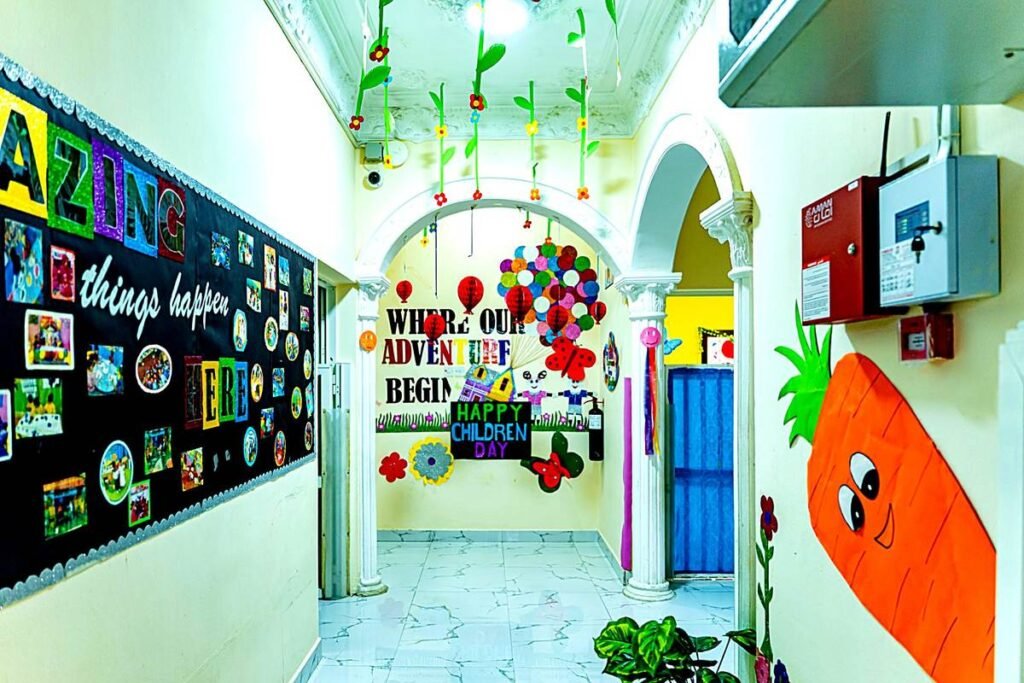
At Balloon Nursery in Al Ghafia, Sharjah, children from 45 days to 4 years learn through our British EYFS curriculum with Montessori-style hands-on learning, in English and Arabic every day. We are open every day from 6:30am to 7:30pm, and a bus service is available. Songs, stories and play are part of how little ones meet both languages. At home, you can build on that with the simple ideas above.
Frequently Asked Questions
What if my own Arabic is not very strong?
Use the language you are most comfortable with and keep it warm and simple. Short songs, picture books and naming things around the house are enough. Your child will enjoy time with you more than they will notice any mistakes.
How often should I sing or read to my child?
A little every day is better than a lot once a week. Even five to ten minutes at bath time or bedtime adds up over months.
Does my baby need to understand the words?
No. Babies first respond to your voice, rhythm and face. Understanding comes later, and hearing songs and stories early helps prepare the way.
Should I use screens for Arabic songs and stories?
Songs from a speaker can be a nice extra, but nothing replaces your voice and attention. Sing, point and talk together rather than letting a device do it for you.
Come and visit
Would you like to see how Arabic and English are part of the day at Balloon Nursery? Message us on WhatsApp at +971 50 342 8582 to book a visit.