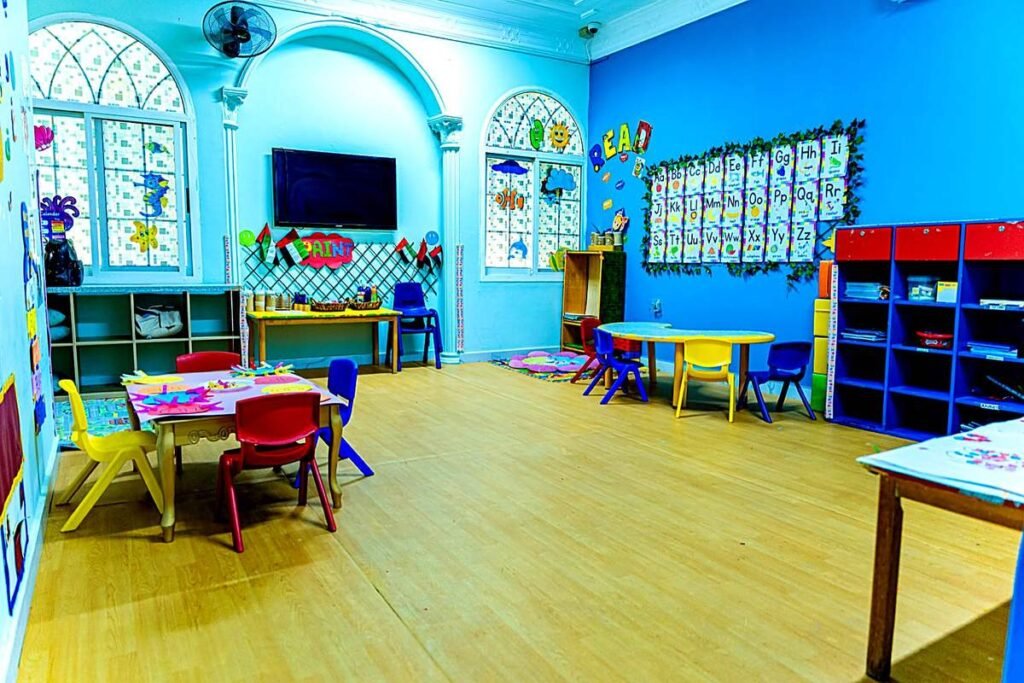
It is 6am, your little one feels a bit warm and has a runny nose, and you need to decide quickly: nursery today, or a day at home? Every parent faces this morning sooner or later, especially in the first year of nursery when children meet lots of new germs. This guide uses advice from the UK’s NHS to help you make that call with more confidence. Our day care page explains how a normal day at Balloon Nursery works when your child is well.
The short version: a child who is clearly unwell, has a high temperature, or has a stomach bug should stay home. A child with a mild cold who is otherwise happy and playing can usually go. The details below help with the in-between days.
This is general information, not medical advice. If you are worried about your child, always speak to your paediatrician. If your baby is very young, our infant care page and our guide to a day in the infant room show how babies are cared for during the day.
The simple rule of thumb
Ask yourself two questions. Is my child well enough to join in with normal play and activities? And could they easily pass something on to other children? If the answer to the first is no, or the answer to the second is yes, a day at home is usually the kinder choice, both for your child and for the other families in the room.
The NHS also suggests letting the nursery know on the first morning your child stays home, and saying why. If your child is well enough to attend but has something catching, tell the staff so they can watch for it in other children.
High temperature (fever)
The NHS counts 38°C or more as a high temperature in children. Its advice is simple: keep your child at home until the temperature has gone. Fevers in young children usually settle within one to four days.
The NHS fever page says to get urgent medical advice if a baby under 3 months has a temperature of 38°C or more, if a baby aged 3 to 6 months has 39°C or more, if a high temperature lasts 5 days or longer, or if your child has a rash, will not feed, seems dehydrated (dry nappies, no tears, sunken eyes) or is just not themselves. Call 998 for an ambulance in the UAE straight away if your child is hard to wake, struggles to breathe, has a rash that does not fade when you press a glass on it, has a stiff neck, or has a fit that does not stop.
Vomiting and diarrhoea
Tummy bugs spread very fast between small children who share toys and tables. The NHS advises keeping a child home until they have had no vomiting or diarrhoea for at least 48 hours. That can feel long when your child seems fine again after a day, but those two days protect the whole class. Keep offering small sips of fluid while your child is ill and watch for signs of dehydration.
Coughs, colds and sore throats
A slight cough, runny nose or sore throat on its own is not a reason to stay home, according to the NHS, as long as your child is otherwise well and has no high temperature. Toddlers can have many colds in their first nursery year, so this one comes up a lot. If a cold comes with a fever, or your child is tired, clingy and not eating, keep them home until they are better. A rested child also has an easier goodbye at the door; our post on crying at drop-off has more on that.
Common infections at a glance
The NHS gives clear guidance for the illnesses parents ask about most:
- Chickenpox: stay home until all the spots have crusted over, usually about 5 days after they first appear.
- Hand, foot and mouth disease: no need to stay home if your child feels well enough.
- Conjunctivitis (sticky eye): no need to stay home unless your child is very unwell. A pharmacist can advise.
- Impetigo: stay home until the sores have crusted over and healed, or for 48 hours after starting antibiotics.
- Scarlet fever: your child can return 24 hours after starting antibiotics from the doctor.
- Measles: see a doctor (call ahead first) and stay home for at least 4 days from when the rash appears.
- Ear infection: if there is a high temperature or bad earache, stay home until your child is better.
- Head lice: no need to stay home; treat at home.
Getting ready for the first nursery year
Children usually catch more bugs in their first months of nursery, and then fewer as their immune system builds up. A few things make sick days easier: keep a working thermometer at home, agree a back-up plan with family for days off, and keep your child’s vaccinations up to date with your paediatrician. A good night’s sleep helps too; our guide to naps at nursery covers daytime rest.
How Balloon Nursery does it
Balloon Nursery in Al Ghafia, Sharjah, cares for children from 45 days to 4 years and is open every day from 6:30am to 7:30pm. We follow the British EYFS curriculum with Montessori-style hands-on learning in English and Arabic, and we are regulated by SPEA. If your child is unwell, simply let us know in the morning, and ask our team about the nursery’s health and sickness guidance when you visit or enrol.
Have a question about your child, or want to see the rooms? Message us on WhatsApp at +971 50 342 8582 to book a visit.
Frequently Asked Questions
Can my child go to nursery with a runny nose?
Usually yes. The NHS says a child with a slight cough, runny nose or sore throat can attend if they are otherwise well and do not have a high temperature.
How long should my child stay home after a fever?
Keep your child at home until the high temperature has gone. The NHS counts 38°C or more as a high temperature in children.
How long after vomiting or diarrhoea can my child go back to nursery?
The NHS advises waiting until your child has had no vomiting or diarrhoea for at least 48 hours before going back.
When should I get urgent help for my child’s fever?
Get urgent medical advice if a baby under 3 months has 38°C or more, a baby aged 3 to 6 months has 39°C or more, or a fever lasts 5 days or longer. In the UAE call 998 straight away if your child is hard to wake, struggles to breathe or has a rash that does not fade under a glass.